Automate Your Home Service Business with AI
Luna AI is built by Kevin Ordoñez, an automation specialist for home service businesses. Every missed call is a job that goes to your competitor, so the systems he builds answer the calls, book the appointments and chase the follow-ups, day or night. You spend less time on the phone and more time on the jobs that pay.
AI-Powered Automation Systems That Capture, Nurture & Convert
What AI Automation Actually Does for a Home Service Business
Instant Response and Appointment Setting
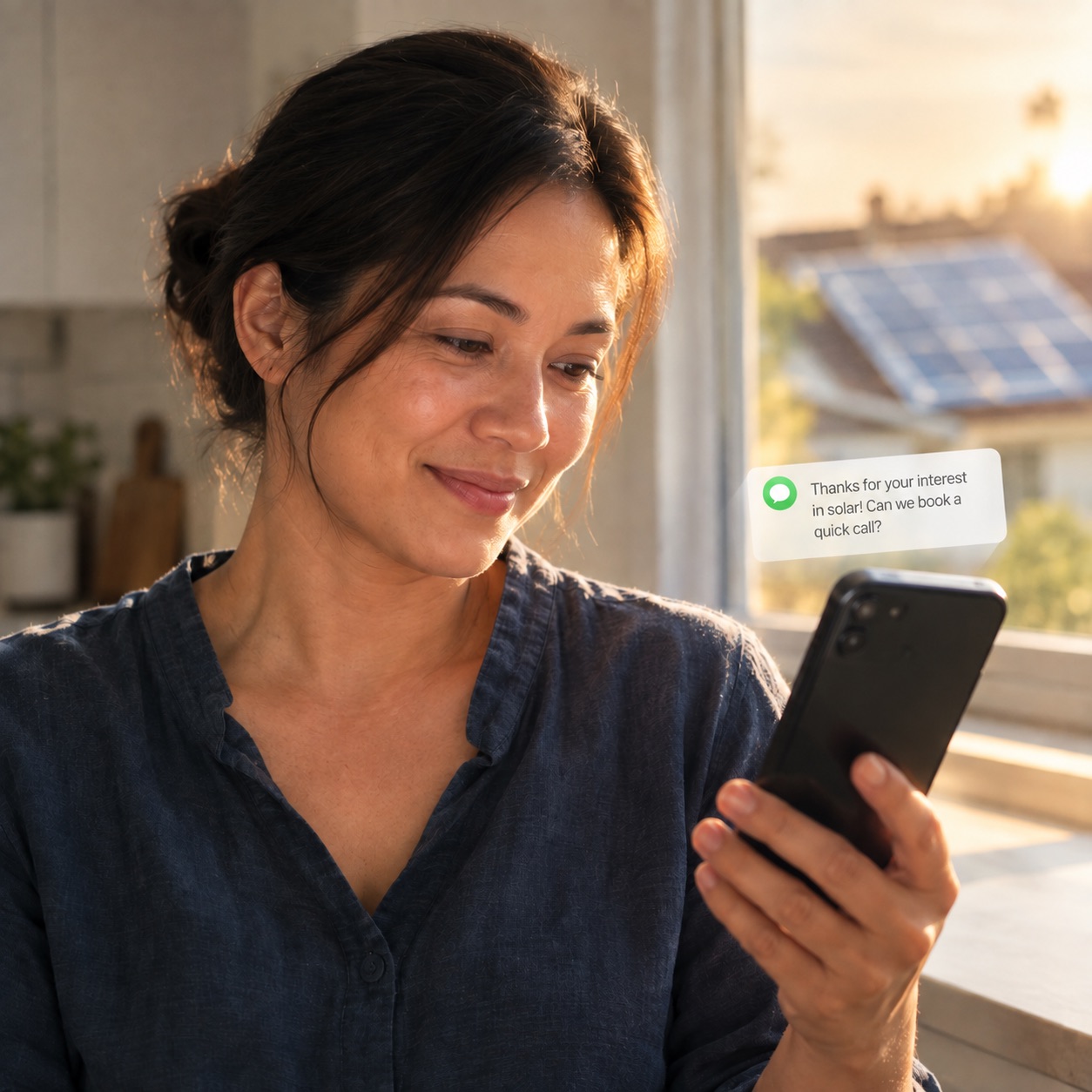
A form fill triggers an SMS to the homeowner in under 60 seconds, before they've closed the tab. If they reply, the conversation either books a slot on your calendar or routes to a live person. Confirmations go out the day before and the morning of, which is the cheapest no-show fix there is.
A CRM Pipeline That Matches Your Actual Job Stages
Your CRM is the software holding all your deals. Most home service businesses run one straight out of the box, with generic stages like "proposal sent" and "closed won." That's not how a job moves. We rebuild the pipeline around the real stages: contacted, site visit booked, quoted, scheduled, parts ordered, work in progress, completed, invoiced. Then you can see which stage jobs are dying in instead of guessing.

Milestone Updates So Homeowners Stop Calling You
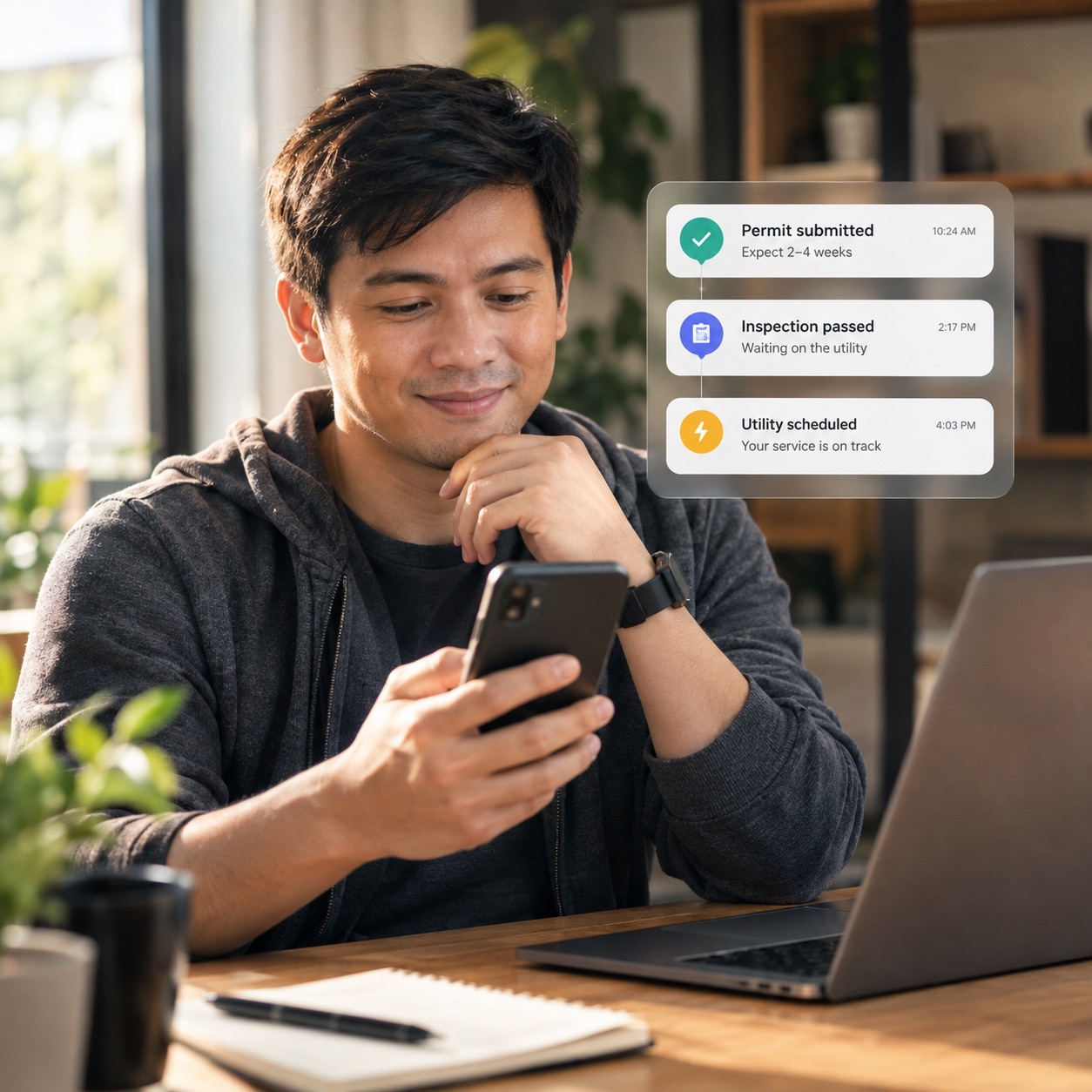
Every time a job changes stage, the homeowner gets a short text saying what just happened and what's next. Parts ordered, fitting booked for Tuesday. Permit submitted, expect two to four weeks. Your coordinator stops spending half her day answering "any news?" and the homeowner stops assuming you forgot about them.
Reactivation and Referral Follow-Up
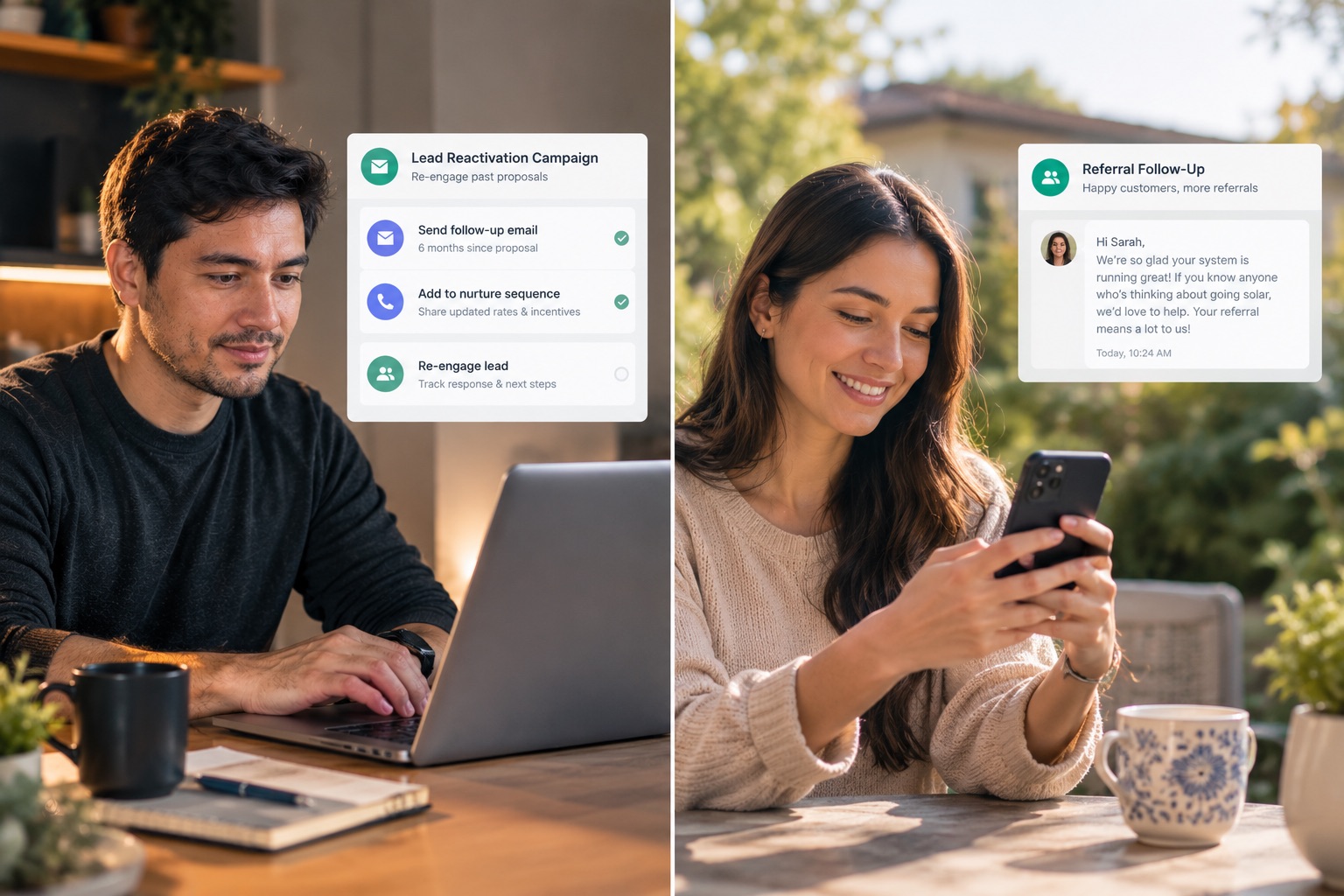
Two lists sit unworked in nearly every home service CRM. The quotes that went quiet six months ago, and the customers whose job you just finished. The first one gets a genuine check-in, since prices and priorities change. The second one gets a referral ask timed to the week the work is done and they are happiest with it.
The stack behind every system I build.

How I build a clearer system.
I don't start with automation first. I start by understanding the logic of the business process.
Spot the Leaks
Spot the Leaks
Uncover the operational blind spots quietly draining leads, revenue, and hours.
Growth doesn't stall because the marketing stopped working, it stalls because the backend can't carry what the front end brings in.











Draw the Blueprint
Draw the Blueprint
Design the pipeline, the data, and the ownership before a single tool gets touched.
Software has never fixed a process nobody agreed on.
Two steps are missing — drag them into place
Wire It Up
Wire It Up
Turn scattered tools and disconnected apps into one intelligent system that does the follow-up, routing, and reporting for you.
Automation multiplies whatever it's pointed at, so it gets pointed at something built on purpose.
Put It to Work
Put It to Work
Move the business onto the new system and make it the place work actually happens.
The build is the easy part; adoption is what separates a live engine from an expensive subscription.
Keep It Running
Keep It Running
Track what matters, retire what doesn't, and catch bottlenecks before they cost deals.
Shift from reactive hustle to proactive, data-driven scaling that compounds instead of decaying.
Frequently Asked Questions
AI automation uses software to handle repetitive business tasks without human input, such as answering calls, replying to enquiries, booking appointments, and following up with leads. Unlike rule-based automation, AI interprets what a customer says and responds conversationally.
A CRM stores every contact, conversation, quote, and booking in one place instead of across your phone, inbox, and notebook. You need one once you're losing track of who enquired, who you quoted, and who never got a reply.
GoHighLevel, or GHL, is an all-in-one platform combining CRM, email and SMS marketing, appointment booking, landing pages, and automation workflows. Service businesses and agencies use it to replace several separate tools with one subscription.
Regular automation follows fixed rules: if a form is submitted, send this email. AI automation interprets unstructured input, so it can understand a phone call, read intent in a reply, and respond in natural language rather than from a template.
Not entirely, but it covers what a receptionist can't: nights, weekends, holidays, and calls that arrive while the phone is busy. An AI voice agent answers, qualifies the caller, and books appointments, then hands anything complex to a human.